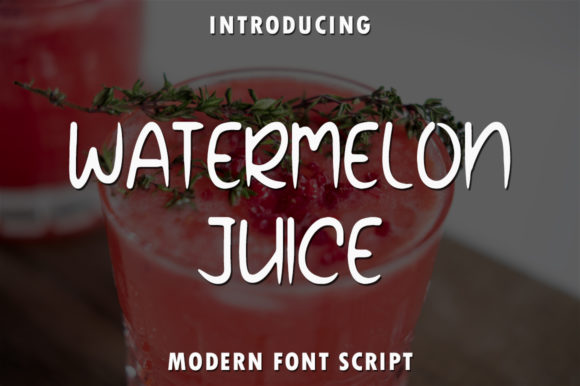
Watermelon Juice: A Friendly Display Font for Creative Expression
Watermelon Juice is more than just a refreshing drink—it’s also a versatile and friendly display font that brings a playful yet professional touch to your design projects. Whether you're crafting greeting cards, designing headlines, or creating invitations, Watermelon Juice offers a unique aesthetic that stands out while maintaining readability. Its soft curves and rounded shapes make it ideal for both digital and print media, giving your content a modern, approachable feel.
Why Watermelon Juice Stands Out
Watermelon Juice is designed with simplicity and clarity in mind. Its clean lines and gentle curves are reminiscent of the fruit itself, making it visually appealing without being overwhelming. This font works well across various applications, from social media graphics to marketing materials, because it balances style with functionality.
One of its greatest strengths is its adaptability. It can be used as a primary font or as a secondary accent, depending on the design needs. For instance, using Watermelon Juice for headlines can add a fun element to otherwise serious content, while its use in body text can create a relaxed and inviting tone.
Common Mistakes When Using Watermelon Juice
While Watermelon Juice is a great choice for many projects, there are several common mistakes that designers often make when using it. Being aware of these can help you avoid pitfalls and ensure your designs look their best.
- Using it as the sole font: While Watermelon Juice is stylish, relying on it for all text can lead to readability issues, especially in longer blocks of content. Always pair it with a complementary serif or sans-serif font for body text.
- Ignoring font size and spacing: Watermelon Juice has a relatively large character footprint, so using it in small sizes can result in poor legibility. Ensure proper line spacing and letter spacing to maintain clarity.
- Overusing it in the same context: Repeating the same font in similar contexts can become monotonous. Use Watermelon Juice selectively to keep your design fresh and engaging.
- Not considering the audience: The casual and playful nature of Watermelon Juice may not suit all audiences. For formal or professional settings, it's better to choose a more traditional font.
How These Mistakes Can Affect Your Design
Mistakes like those listed above can have a noticeable impact on the overall effectiveness of your design. Poor readability can confuse your audience, leading to a lack of engagement or even misinterpretation of your message. Inconsistent font usage can make your design look unprofessional, which may harm your brand’s image.
Additionally, overuse of Watermelon Juice can dilute its visual appeal. When used sparingly and thoughtfully, it adds personality and charm. But when applied too broadly, it can lose its impact and become distracting.
Practical Tips for Using Watermelon Juice Effectively
To make the most of Watermelon Juice, consider the following tips:
- Use it strategically: Save Watermelon Juice for headlines, logos, or key phrases where it can shine without overwhelming the reader.
- Pair it wisely: Combine it with a contrasting font for body text to ensure readability and balance in your design.
- Test different sizes: Experiment with varying font sizes to find the optimal balance between style and legibility.
- Consider the context: Think about the purpose of your design. If it's for a casual event or a fun project, Watermelon Juice is a great fit. For more formal settings, opt for a more traditional font.
- Check for accessibility: Ensure that your design is accessible to all users, including those with visual impairments. Use high contrast and readable fonts for maximum accessibility.
What to Check Before Finalizing Your Design
Before finalizing your design, take a moment to review the following:
- Readability: Does your text remain clear and easy to read at different sizes and distances?
- Visual harmony: Do the fonts work together to create a cohesive and balanced design?
- Contextual relevance: Is the font appropriate for the intended audience and purpose of the design?
- Accessibility: Are your choices inclusive and usable for all users, including those with disabilities?
- Consistency: Are the fonts used consistently throughout the design, or are there unnecessary variations?
By taking these factors into account, you can ensure that your use of Watermelon Juice enhances rather than detracts from your design.